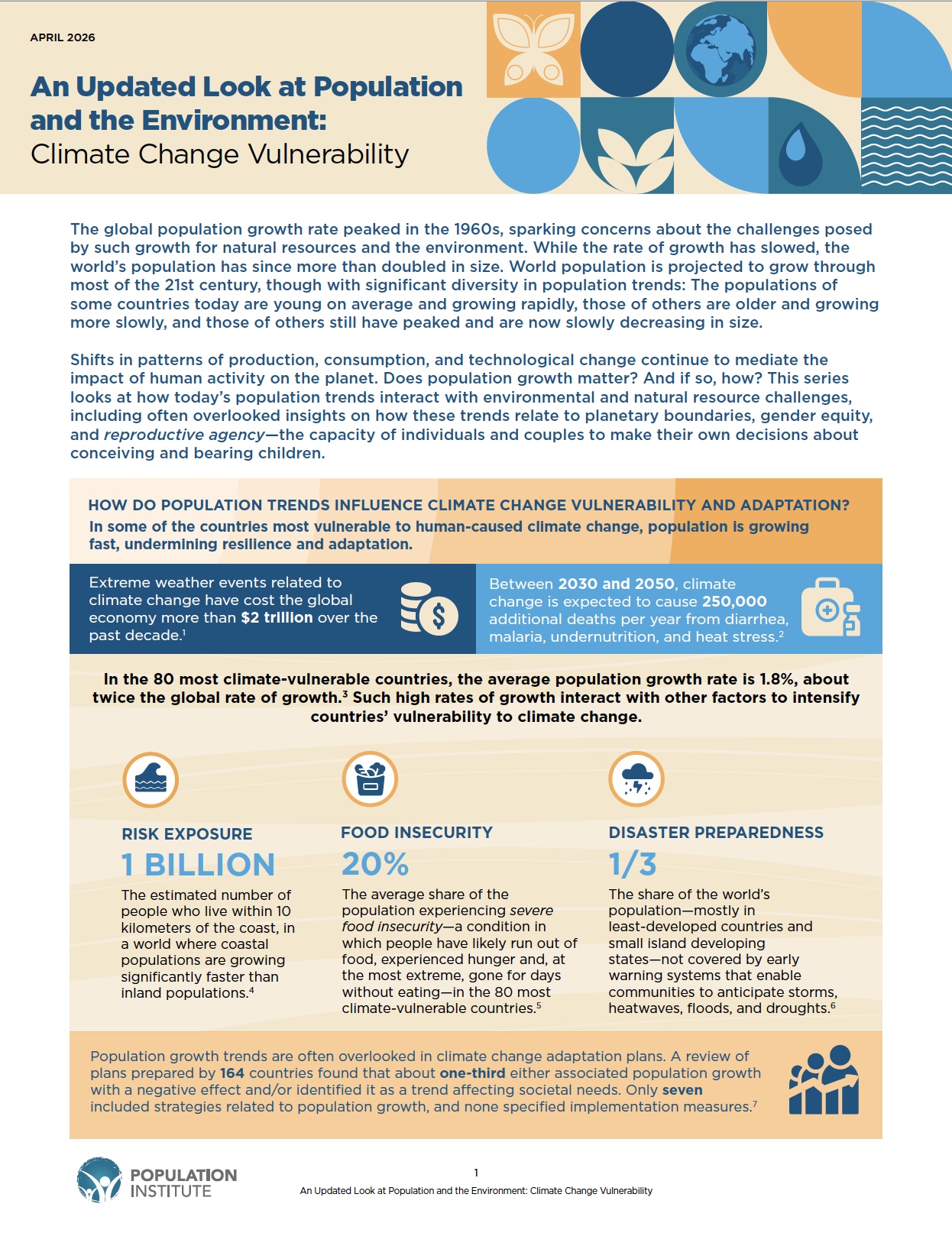
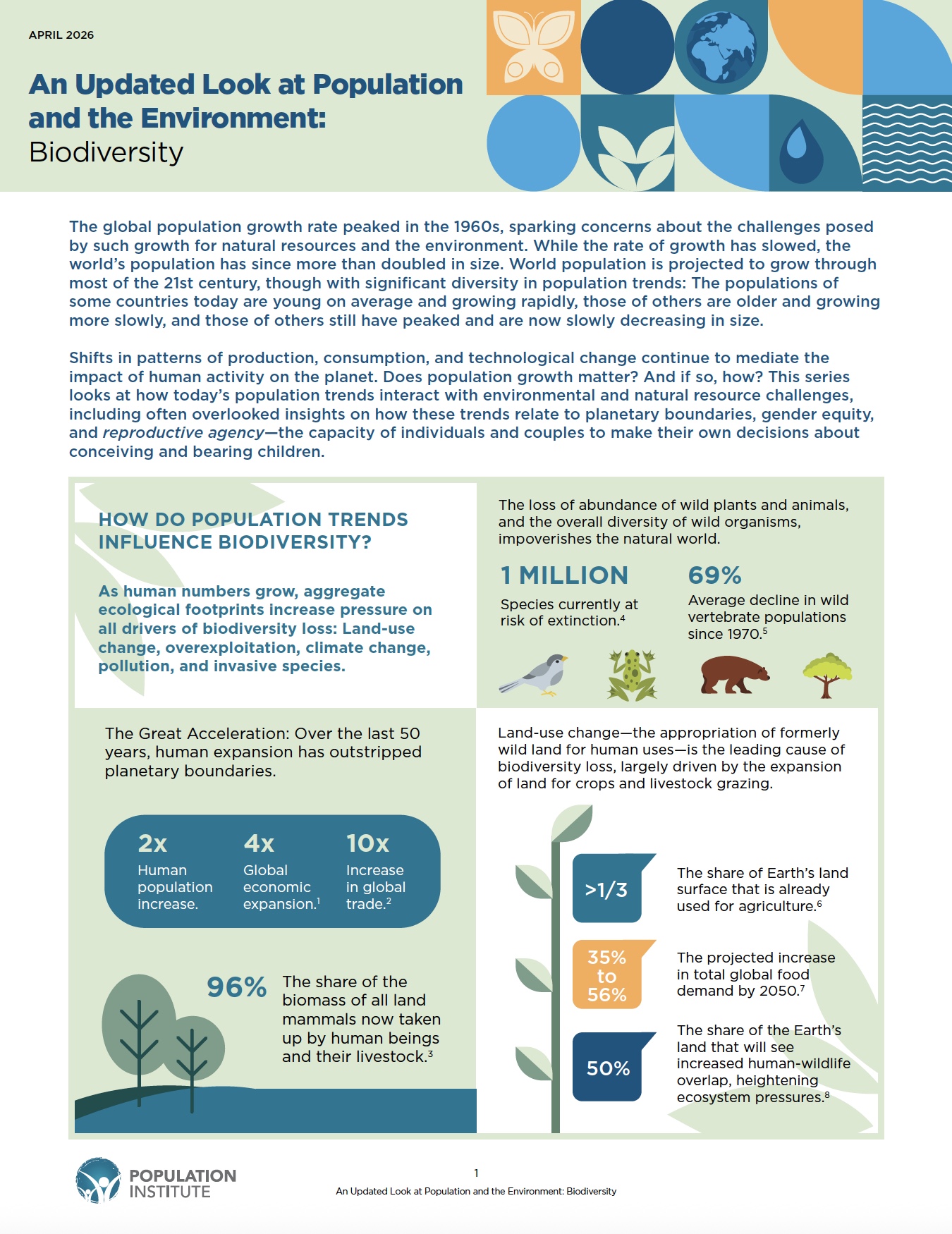
The global population growth rate peaked in the 1960s, sparking concerns about the challenges posed by such growth for natural resources and the environment. While the rate of growth has slowed, the world’s population has since more than doubled in size. World population is projected to grow through most of the 21st century, though with significant diversity in population trends: The populations of some countries today are young on average and growing rapidly, those of others are older and growing more slowly, and those of others still have peaked and are now slowly decreasing in size.
Shifts in patterns of production, consumption, and technological change continue to mediate the impact of human activity on the planet. Does population growth matter? And if so, how? This series of briefs looks at how today’s population trends interact with environmental and natural resource challenges, including often overlooked insights on how these trends relate to planetary boundaries, gender equity, and reproductive agency—the capacity of individuals and couples to make their own decisions about conceiving and bearing children.
Download the Biodiversity brief:
Download the Climate Change Vulnerability brief: